when nonlinear structure has issues: shimmer lake case study
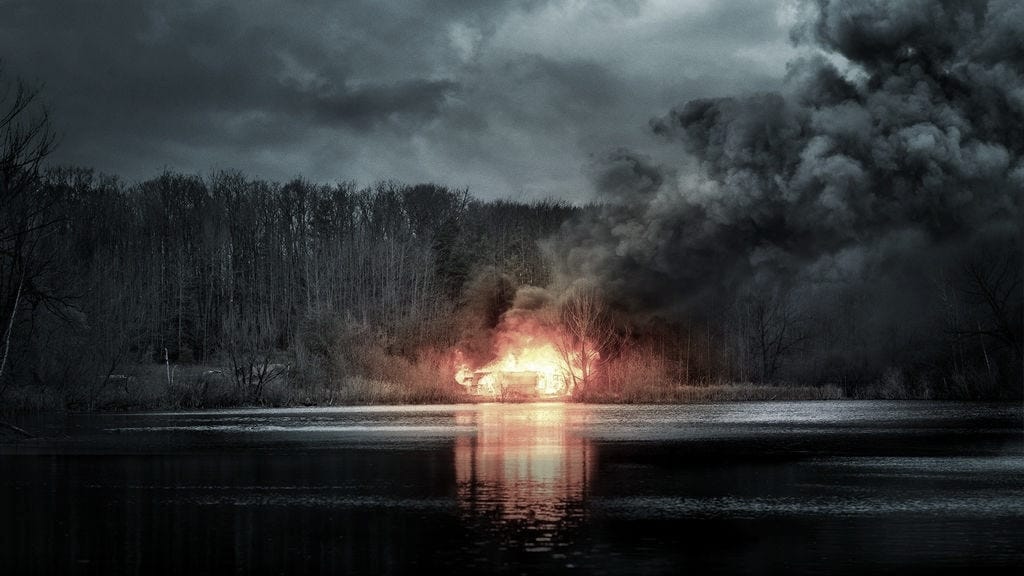
If you want to write a nonlinear story, only focusing on films that have done that brilliantly can be a bit discouraging.
What’s more, well-crafted stories are often less educational than you expect. After all, good use of narrative techniques includes these techniques to be as seamlessly and inconspicuously integrated into the storytelling as possible.
In other words, it’s hard to notice exactly what does make something work.
On the other hand, one of the more useful things you can do is to notice what doesn’t work and learn from that.
Shimmer Lake
I have already talked about my love for Memento. In case you missed it, you can find it here:
 Katja
Katja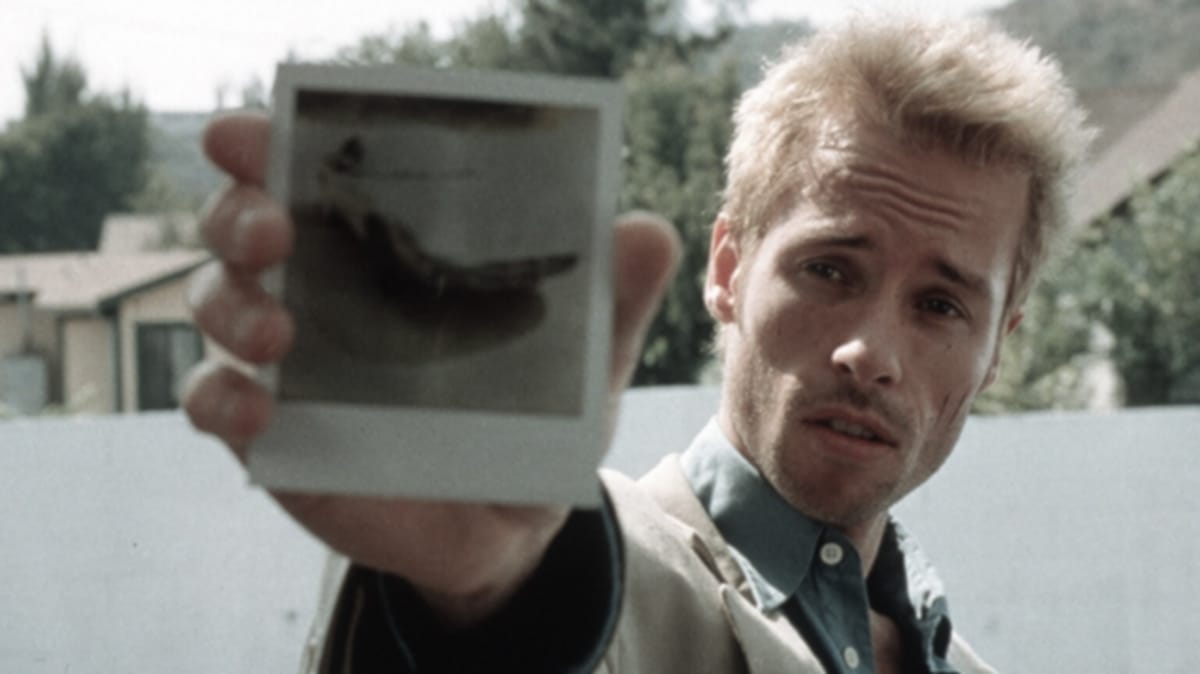
Today, I want to talk about a slightly less successful implementation of reverse storytelling in Shimmer Lake. I feel a bit bad about dissecting it here because the movie is not bad and has its moments.
However, it has two big problems in relation to its narrative structure. Incidentally, these are also the two most common problems when it comes to nonlinear narration.
So it’s a great opportunity to learn from it.
PLEASE NOTE:
The text below contains major spoilers for the movie Shimmer Lake (2017).
You do not need to have seen the movie to understand the post below but it would probably help.
If you decide to watch the movie before reading the post, I invite you to pay attention to how easy/difficult it is to keep track of the relationships between characters and the information about the backstory.
Now let’s get into it.
Quick recap
In Shimmer Lake, we follow a small-town sheriff Zeke Sikes as he investigates a bank robbery that involved his brother Andy and two other men, Ed and Chris.
The film starts on Friday and then unfolds backwards day by day until Monday. Each day peels back layers about Monday’s bank robbery and reveals more about the characters and their relationships.
As I’ve mentioned, the film is an enjoyable gem and if you like these types of movies, you will probably like Shimmer Lake as well. In fact, it becomes more enjoyable the second time you watch it because it is easier to follow and you can understand the subtext of some scenes much better.
There are a few elements that make this film more than average in my view - such as the character of Reed, Zeke’s partner, who has a date with a mysterious girl Wendy that turns out to be takeout from Wendy’s, and his frustration at having to sit in the back of the car every day. It’s elements like these that breathe some life and vibrancy into the story and make it worth the watch.
However, today, I want to focus on Shimmer Lake’s structure and this is where the film encounters some issues.
The two most common pitfalls of nonlinear narration
There are two main problems I want to discuss.
These are also the most common problems of any nonlinear narration, so Shimmer Lake presents a great case study for anyone wanting to write a nonlinear story:
- Conveying information aka exposition (issue of a more technical nature)
- Structure unrelated to the theme or premise of the story (issue of a more conceptual nature)
Conveying information

We are all familiar with the good ol’ “show, don’t tell” advice. And you may think it’s way too often repeated - until you watch a movie in which you get bombarded by all the information characters merely say out loud and you’re somehow supposed to remember all of it.
In other words, you get overwhelmed by info-duping. You feel like you’re in school where instead of having an experience, you’re expected to memorize information.
A similar thing happens in Shimmer Lake.
In the film, most of the essential information about the plot is conveyed through characters explicitly talking about it.
The thing that makes it even more complicated is that the movie tries to convey three types of things this way:
- the backstory of the film’s story: the meth lab explosion in which Stephanie’s son died, and the roles all the characters had in this event.
- Information about what happened in the previous days: this is part of the story we see in the film but because it is unfolding in reverse, we first hear about these events as though it was a backstory.
- Character’s relationships and personalities.
All of these are crucial to understand the film’s plot and its plot twist. But sadly, they are all mainly conveyed through explicit “info-dumping” via dialogue.
The two backstories

Conveying backstory to the audience is a common challenge for every writer.
How can you show what happened before?
One way is to look for the characters’ behaviours and reactions that express the backstory. But if you can’t find any, what then? You can use flashbacks or other narrative techniques.
Although sometimes necessary, characters directly explaining things should ideally be the last resort. This goes for all creative writing but it is especially true for playwriting and screenwriting.
But this is exactly what Shimmer Lake relies most heavily on.
For comparison, in Memento, there are many visual anchors for the audience to orient ourselves and remind us of what we’ve seen before. Memento truly makes sure that we as the audience are following what it wants us to follow.
But the way Shimmer Lake’s structure is set up, it doesn’t really leave a lot of room for anything other than info-dumping. Its backstory seems too complicated and intellectualized for the chosen structure. This backstory and all the relationships between people would work perfectly well in a linear narrative.
Characters & relationships

I’ll be honest; when I watched Shimmer Lake the first time, I had a hard time keeping track of who’s who, what their relationships are, and what has happened so far. Especially because a big part of the story’s twist relies exactly on the relationships between characters.
But the problem is, I haven’t seen these relationships, I’ve only been told about them.
The same goes for the main red herring character, Ed.
There are just too many instances when the plot or the audience’s understanding of it relies heavily on hearing about Ed and imagining what he has or hasn’t done - without having met him yet.
“But Katja,” you might say, “In Memento we also hear about characters that are not present, like Leonard’s wife, John G., or Natalie’s boyfriend Jimmy.”
That’s true. But in all of those instances, the characters we hear about aren’t the focus. It’s not about them. They only matter in relation to the characters we do see before us.
For example, Natalie’s boyfriend Jimmy doesn’t matter by himself. What matters when Natalie talks about him is how this makes her feel and act right now. It’s the same with Leonard’s wife. She is not an active character in the story; all that matters about her is Leonard’s relationship to her in his mind and how this makes him feel and act.
In Shimmer Lake, on the other hand, we hear so much about Ed Burton and the entire plot twist/revelation depends on the audience actively imagining Ed doing what the other characters say he is doing.
But here’s the thing. I can’t imagine Ed taking off with the money because I have never seen Ed. I don’t know who he is, what he does, how he acts, nothing. I only know how other characters feel about him.
He is supposed to be the main red herring but we only meet him two-thirds into the movie. Before that, we only see a picture of him for a few seconds and that, I’m sorry to say, is just not enough for me to know the character.
I do believe if we saw the movie in a linear way (without knowing the final revelation of course), Ed would make a much more believable red herring.
In general, for this story to be as impactful as it has the potential to be, the audience needs to have a firm grasp on the backstory and all the characters’ relationships. Which, for Shimmer Lake, would come through much better in a more conventional linear structure.
Theme aka Why this structure?

One of the main issues I take with Shimmer Lake’s structure is that I simply see no substantial reason for it. Why this specific structure? Why go back day by day? Why tell it in reverse?
True, the way the story unfolds does have its technical logic. Each day, we see a dead body or a murder take place and then we see the previous day showing the events that lead to this dead body or murder. Which sounds like a cool idea, but that’s about it.
I could say the same for the structure of the entire movie. It’s an interesting idea but… that’s about it. Instead of highlighting the film’s themes of revenge, extrajudicial punishment, corruption, deception, etc, the structure actually stifles them and makes them harder to come through.
The story itself is interesting and it’s a pity a lot of it gets lost in the confusion of the structure and its way of conveying information.
Now, as I’ve mentioned before, I don’t hate the film and I think it’s actually quite an enjoyable gem. But I do believe it would be a better film (although perhaps less often mentioned as an interesting or quirky one) if it just went with the conventional linear storytelling.
So. What’s a good narrative structure?
It’s the one that will tell your story the best.
In accordance with what you want the story to say, and what you want the audience to experience.
And when the narrative structure is connected to the heart of the story, to the heart of the plot, it will make sense and it will feel intuitive and organic.
One thing I like to say is, “Do what is best for the story, not your ego.”
The narrative structure is an example of that. Sometimes, you want to use a cool, edgy, unconventional structure and you try to shove just any story you have into it without actually paying attention to the story itself and how it would be best expressed. The idea of doing a cool new thing seems more appealing than focusing on the story that is in front of you.
Hey, I’m not judging, I’ve definitely done that.
But if you notice that happening, take a step back and ask yourself what matters the most in the material you are currently working with. And remember you can always use either the structure or story idea in some other way later.
See you in the next post
Katja